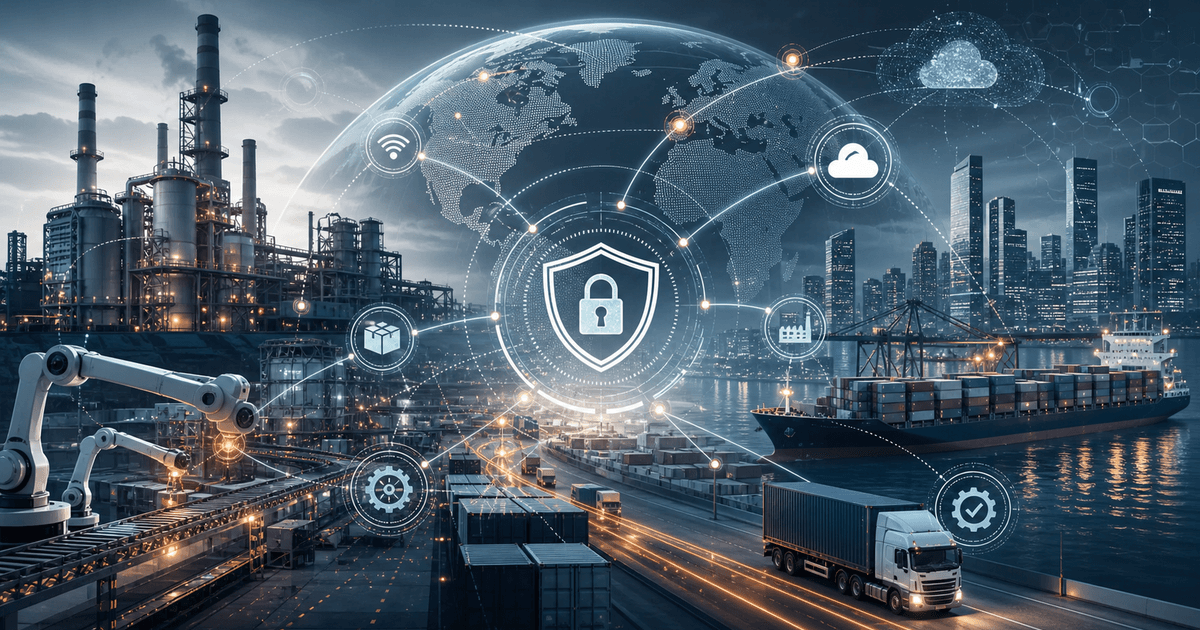
Asia's Digital Supply Chain Poses Distinct Security Challenges
Asia's interconnected digital ecosystems, divergent regulatory regimes, and rapid AI adoption are creating unique and complex security risks for regional and global supply chains, according to a new analysis.

Executive Summary
Asia's digital supply chain presents a distinct and escalating set of security challenges driven by the region's unique economic and technological landscape. According to an analysis published by Dark Reading, the convergence of deeply interconnected digital ecosystems, starkly divergent national regulatory frameworks, and the breakneck pace of artificial intelligence adoption is creating a complex risk environment that organizations operating in or with Asia must urgently address. This complexity is not merely a regional concern but a critical node in global technology and manufacturing networks, amplifying the potential impact of supply chain compromises.
Technical Analysis
The security posture of Asia's digital supply chain is fundamentally shaped by its structural characteristics. Unlike more siloed Western models, Asian digital ecosystems are often highly interconnected, with platforms and services from major tech firms deeply embedded across business and consumer life. This creates a sprawling attack surface where a compromise in one service or platform can have cascading effects across numerous downstream businesses and consumers. The technical integration is so profound that mapping dependencies and trust boundaries becomes a significant challenge for security teams.
Compounding this is the rapid, often uncoordinated, integration of AI capabilities. The analysis suggests AI is being deployed at a pace that frequently outstrips the implementation of corresponding security guardrails and testing protocols. This introduces novel risks, including data poisoning of training sets, exploitation of AI model vulnerabilities, and the propagation of AI-generated misinformation or malicious code through automated supply chain interactions. The lack of standardized security frameworks for AI in the supply chain leaves critical gaps.
Tactics, Techniques & Procedures
While the analysis does not attribute specific TTPs to named threat actors, it outlines the broader exploitation vectors inherent to this environment. Threat actors are likely to leverage the complex interdependencies (T1591) between firms and platforms to move laterally after an initial breach. The regulatory fragmentation across jurisdictions can be exploited to establish safe havens for malicious infrastructure or to conduct operations that fall into enforcement gaps. Furthermore, the integration of insufficiently secured AI components creates opportunities for novel attacks, including supply chain poisoning (T1195.002) and the manipulation of automated decision-making processes within logistics, finance, and manufacturing.
Threat Actor Context
The analysis does not name specific advanced persistent threat (APT) groups or cybercriminal gangs focusing on this vector. However, the described environment is a ripe target for a wide spectrum of malicious activity. Nation-state actors likely view the interconnected supply chain as a high-value target for espionage and prepositioning, while cybercriminal groups may exploit weaker regulatory enforcement in certain jurisdictions to launch financially motivated attacks, such as ransomware or data theft, against poorly defended nodes that have trusted connections to larger, more secure organizations.
Mitigations & Recommendations
The analysis calls for a multi-faceted approach to mitigate these unique risks. Organizations are advised to conduct enhanced due diligence on Asian supply chain partners, moving beyond checkbox compliance to assess their actual security posture and ecosystem dependencies. Implementing continuous monitoring for anomalies across interconnected systems is critical, as is advocating for and adopting regional standards and information-sharing initiatives to bridge regulatory divides. For AI-specific risks, firms must insist on transparency from vendors regarding the security of AI models and training data, and integrate rigorous testing for AI components within their software supply chain security practices. Building incident response plans that account for cross-jurisdictional legal and communication hurdles is also essential.
Stay Updated
Get the latest cybersecurity news delivered to your inbox.